
Veterinary Clinical Assistant
Study Duration:
3 Months Platform Access
30 hours + 1 Assignment (3,000 words)
Certifications
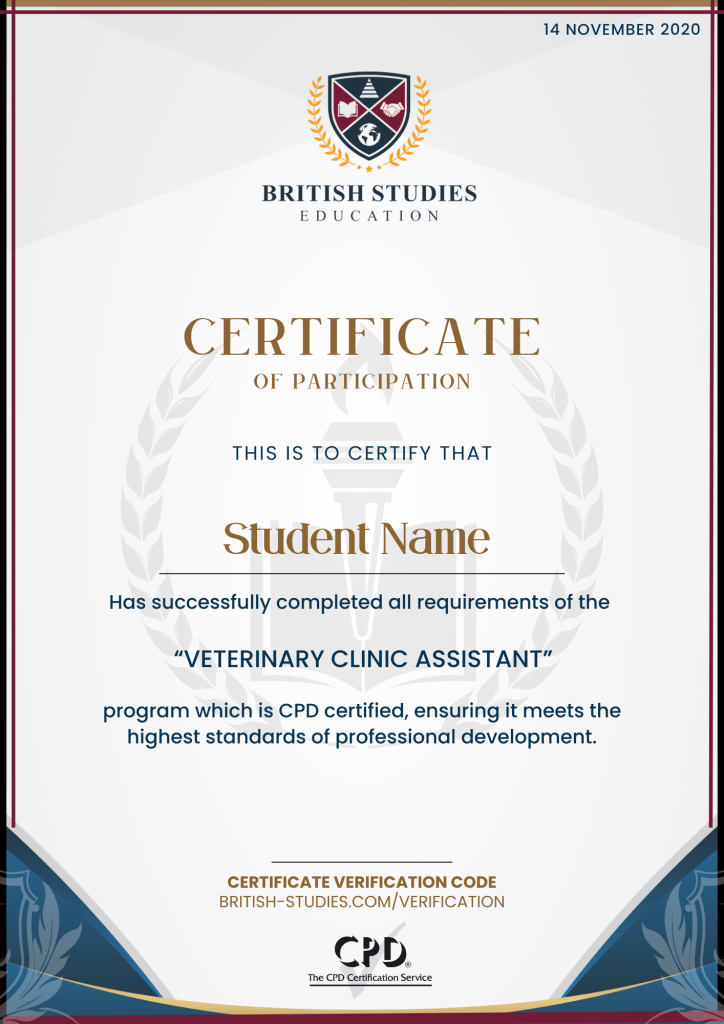
Studi britannici CPD Diploma
Limited Time Tuition Fees
3 monthly payments: €70 / month (Total €210)
One-time payment: €145 (Save €65)
Veterinary Clinical Assistant
Welcome to the Veterinary Assistant & Animal Nutrition Diploma! Working as a Veterinary Assistant specializing in animal nutrition is a highly rewarding way to make a tangible, daily difference in the health and vitality of animals. However, the technical medical terminology, clinical equipment demands, and complex dietary requirements across different species can often feel overwhelming to industry newcomers. Designed to bridge that gap, this course presents key concepts in clinical animal care and evidence-based nutrition in a clear, accessible manner so you can enter the veterinary field with confidence.
The “Veterinary Clinic Assistant” training program provides you with the necessary theoretical knowledge and training, covering various topics related to animal health and disease, including cell biology, tissue classification, and the structure and functions of bones and the skeleton.
Throughout this comprehensive 30-module curriculum, you will gain a realistic, in-depth insight into the inner workings of a modern veterinary practice and explore diverse pathways for professional advancement. You will master patient care across every stage of treatment—from initial consultation and diagnostic testing to routine surgery, emergency triage, and post-operative recovery. Simultaneously, you will build specialized expertise in companion, exotic, and equine nutrition, learning to calculate caloric requirements, analyze pet food labels, manage clinical diets for disease states, and provide nutritional counseling to pet owners. In addition, you will acquire essential knowledge of workplace health and safety laws, ethical decision-making, and compassionate communication strategies for supporting clients through emotional strain.
You will learn:
- Industry & Career Development: Gain an overview of veterinary practice operations and assistant roles, learn strategies to boost employability, and map out pathways for long-term career advancement
- Health, Safety & Legal Governance: Master occupational health and safety regulations, clinical hazard management, animal welfare legislation, and infection control standards.
- Foundational Animal Nutrition & Metabolism: Understand essential nutrient classes (proteins, fats, carbohydrates, vitamins, minerals, water), digestive anatomy across species, and metabolic processes.
- Life-Stage & Species-Specific Feeding: Formulate and manage optimal nutritional plans for puppies, kittens, adult, senior, pregnant, lactating, working, exotic, and equine animals.
- Clinical & Therapeutic Nutrition: Apply targeted clinical diets to support the management of renal disease, obesity, diabetes, gastrointestinal disorders, cardiac conditions, and urinary tract issues.
- Clinical Terminology & Medical Equipment: Build fluency in veterinary medical shorthand, anatomical directions, and equipment used in consultations, laboratories, and operating suites.
- Diagnostic Support & Surgical Assistance: Assist with routine diagnostic testing, sample processing, radiograph positioning, surgical theater preparation, and patient recovery.
- Species-Specific Handling & Emergency Response: Execute low-stress handling and restraint techniques while learning triage protocols and emergency first-aid administration.
- Nutritional Counseling & Client Communication: Analyze commercial pet food labels, conduct dietary histories, deliver clear nutritional guidance to pet owners, and communicate compassionately during emotional situations.
Upon successful completion of this program, you will be able to pursue the following positions:
- Veterinary assistant
- Small animal veterinary assistant
- Veterinary reception staff
- Animal caretaker
- Administrative assistant at a veterinary practice
Modules:
Module 1: Introduction To The Veterinary Industry
Module 2: Qualifications For Veterinary Support Assistants
Module 3: Health And Safety Laws And Regulations
Module 4: Care and Monitoring of Inpatients
Module 5: Animal Health And Welfare
Module 6: Key Veterinary Terminology And Equipment
Module 7: Common Procedures
Module 8: Animal Handling
Module 9: Dealing With Emergencies
Module 10: Customer Service In The Veterinary Practice
Module 11: Introduction to Food Types, Types of Diet and Pet Food Labels
Module 12: Why Nutrition is Vital for Pets
Module 13: Digestion
Module 14: Feeding Stages in a Pet’s Life
Module 15: Pet Weight
Module 16: Pet Food
Module 17: Snacks and Treats
Module 18: Herbs and Green Foods
Module 19: Foods to Avoid
Module 20: Essential Oils for Pets
Module 21: Species Specific Sources of Nutrition/Nutrients
Module 22: Rabbits and Guinea Pigs
Module 23: Mice, Hamsters and Rats
Module 24: Fish
Module 25: Birds
Module 26: Reptiles
Module 27: Keeping a Food Diary
Start Your Enrollment & Secure Your Spot